Warehouses are fast-moving environments where people, vehicles, and heavy loads interact every day. When safety controls slip, even briefly, the result can be serious workplace injuries, damaged stock, and costly downtime. Safety incidents in warehouse operations do not just affect workers on the floor. They disrupt productivity, increase compliance risks, and place long-term strain on business performance. Understanding why warehouse accidents happen, how to spot risks early, and what practical steps reduce incidents is critical for maintaining a safe, compliant workplace.
This article is based on extensive research using Australian government guidance, industry standards, and professional safety resources, including materials from Safe Work Australia and relevant WHS regulators. This guide breaks down common safety incidents, their causes, and proven prevention strategies that actually work on real warehouse floors.
What Are Safety Incidents in Warehouses?
Safety incidents in warehouses refer to unplanned events that result in injury, damage, or near misses during daily operations. These incidents can involve people, equipment, racking systems, vehicles, or hazardous materials. Workplace accidents range from minor slips to serious forklift collisions or structural racking failures.
Warehouse safety incidents are not always dramatic. Near-miss incidents, where no injury occurs but the potential was present, are just as important. They highlight weaknesses in safety procedures, training, or site layout. According to WorkSafe Victoria, near misses are strong predictors of future workplace accidents if left unaddressed.
Effective warehouse risk management focuses on identifying hazards early, understanding how incidents occur, and applying practical controls. This approach reduces workplace injuries while improving overall workplace safety and operational reliability.
Common Types of Safety Incidents in Warehousing
Slips, Trips, and Falls
Slips, trips, and falls remain one of the most common warehouse accidents. Spills, uneven floors, damaged pallets, and poor housekeeping are frequent causes. These incidents often result in sprains, fractures, or lost time injuries. Clear walkways, good lighting, and consistent cleaning routines play a key role in accident prevention.
Forklift and Vehicle Incidents
Forklift incidents are among the most serious safety incidents in warehouses. Collisions with pedestrians, racking, or other vehicles can cause severe injuries or fatalities. Poor traffic management, inadequate training, and time pressure often contribute. Safe Work NSW forklift guidance data shows forklifts are a leading cause of workplace fatalities in logistics environments. Physical barriers, speed limits, and operator training are essential warehouse racking safety controls.
Manual Handling and Lifting Injuries
Manual handling injuries occur when workers lift, push, or carry loads incorrectly. Repetitive tasks, awkward postures, and heavy loads increase the risk of musculoskeletal injuries. Manual handling training and ergonomic improvements reduce strain and support long-term workplace safety.
Falling Objects and Racking Failures
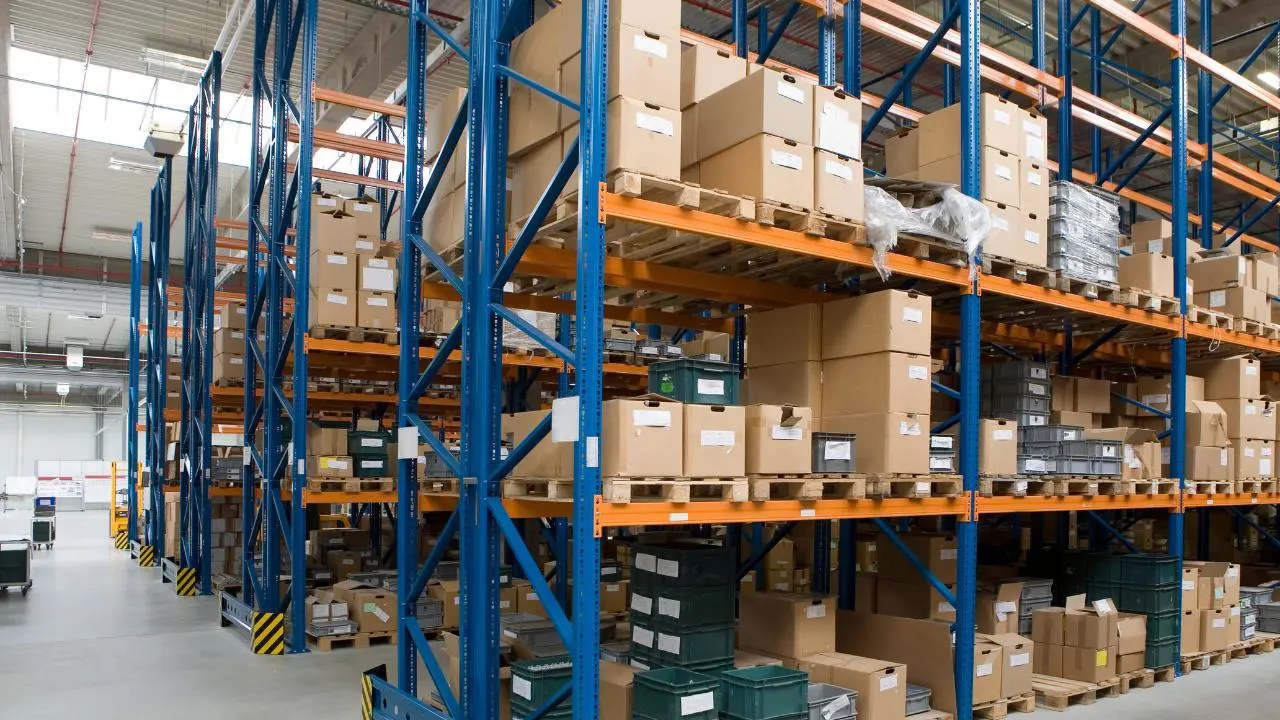
Falling objects from pallet racking can cause serious injuries and equipment damage. Overloading, incorrect beam installation, and impact damage are common causes. Regular pallet racking inspections help identify issues early and prevent racking failures before incidents occur.
Hazardous Materials and Chemical Exposure
Warehouses storing chemicals or dangerous goods face risks from spills, leaks, or incorrect handling. Inadequate labelling, poor storage, and lack of training increase exposure risks. Compliance with Australian WHS regulations and proper safety procedures are essential.
Why Incidents Occur in Warehouses
Poor Training and Supervision
Insufficient workplace safety training leaves workers unsure how to operate equipment safely or respond to hazards. New starters and labour-hire staff are particularly vulnerable. Without proper supervision, unsafe behaviours can quickly become routine.
Unsafe Work Practices and Shortcuts
Time pressure often leads to shortcuts. Workers may bypass safety procedures to meet targets, increasing the risk of accidents. These behaviours usually signal deeper issues with workload planning and safety culture.
Inadequate Maintenance and Housekeeping
Damaged racking, worn forklifts, and cluttered aisles increase exposure to hazards. Poor housekeeping is one of the easiest risks to control, yet it is often overlooked in busy warehouses.
Fatigue, Shift Work, and Time Pressure
Long shifts, night work, and tight deadlines contribute to fatigue, reduced focus, and slower reaction times, increasing workplace accident risk.
Impact of Safety Incidents on Warehouse Operations
- Worker Injuries and Lost Time: Workplace injuries lead to absenteeism, reduced morale, and higher staff turnover. Recovery time impacts productivity and places extra strain on remaining workers.
- Operational Disruptions and Delays: Accidents often halt operations during investigations or repairs. Damaged racking or equipment can disrupt workflows for days or weeks.
- Financial Costs and Insurance Claims: Safety incidents increase workers’ compensation premiums, repair costs, and potential fines. According to Safe Work Australia, workplace injuries cost Australian businesses billions annually in lost productivity and claims.
- Legal Liability and WHS Compliance Risks: Failure to manage workplace safety risks exposes businesses to legal penalties under the Work Health and Safety Act, enforced by regulators such as SafeWork NSW.
How to Identify Safety Risks Before Incidents Happen
Workplace Inspections and Hazard Reporting
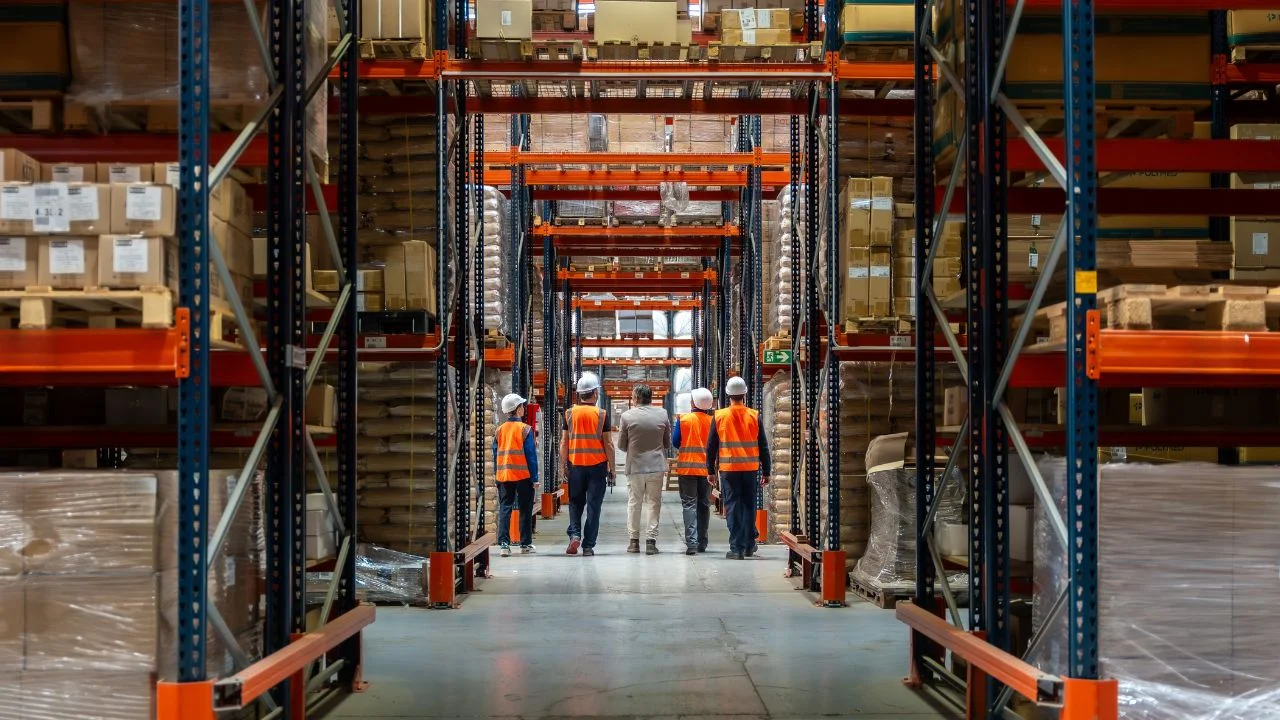
Routine workplace inspections identify hazards such as damaged racking, worn equipment, or poor traffic flow. Encouraging workers to report hazards supports early intervention. Regular warehouse inspections help maintain compliance and reduce risk.
Incident and Near-Miss Data Analysis
Analysing incident reporting data reveals trends and recurring issues. Near miss incidents offer valuable insight into hazards before injuries occur.
Risk Assessments and Job Safety Analysis
Workplace risk assessments break tasks into steps, identifying hazards and controls. Job Safety Analysis improves consistency in high-risk activities.
Worker Feedback and Safety Consultations
Frontline workers often spot risks first. Safety consultations improve hazard identification and engagement.
Regular Racking Maintenance
Routine maintenance prevents failures. Understanding common racking mistakes and following proper racking installation practices aligned with AS 4084 standards reduces falling object risks. Seasonal demand changes should also be considered using seasonal safety planning.
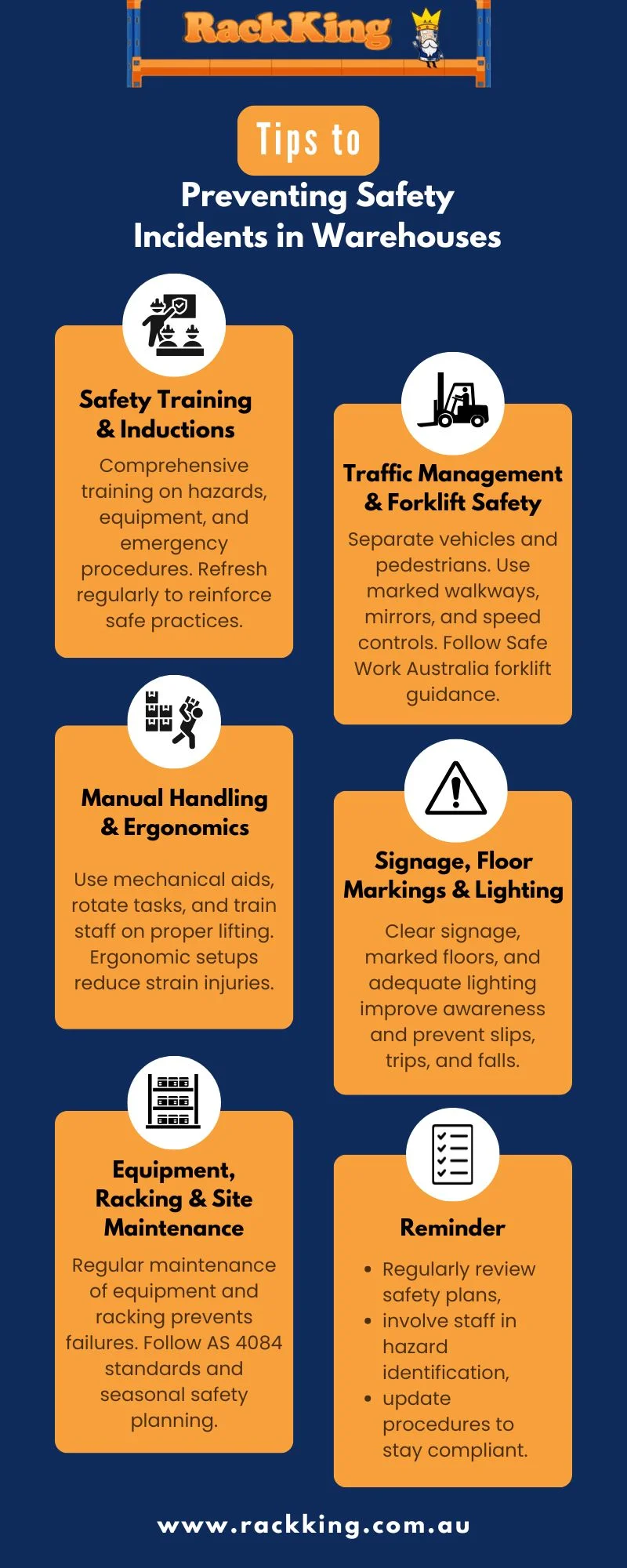
How to Prevent Safety Incidents in Warehouses
How to Respond to a Safety Incident
- Immediate Response and First Aid: Secure the area, provide first aid, and eliminate immediate hazards. Prompt response reduces injury severity.
- Incident Reporting and Documentation: Accurate incident reporting supports compliance and investigation. Records should be clear and timely.
- Investigation and Root Cause Analysis: Investigations focus on why the incident occurred, not who is at fault. Root cause analysis supports long-term accident prevention.
- Corrective Actions and Follow-Up: Controls must be implemented and reviewed to ensure effectiveness.
Legal and Compliance Requirements in Australia
WHS Duties for Employers and Managers
Australian law requires employers to provide safe systems of work. Guidance from Safe Work Australia outlines duties for hazard identification and risk control.
Incident Notification and Record-Keeping
Certain incidents must be reported to regulators, such as SafeWork NSW. Records support compliance and audits.
Penalties for Non-Compliance
Non-compliance can result in fines, prosecutions, and reputational damage under Australian WHS laws.
Conclusion
Safety incidents in warehouses are preventable when risks are identified early and controlled consistently. Strong safety procedures, proper training, and regular inspections protect workers while improving operational performance. A proactive approach to warehouse safety reduces injuries, downtime, and compliance risks, creating a safer and more efficient workplace for everyone.
If you want to strengthen warehouse safety and ensure your racking systems meet Australian standards, Rackking Australia provides expert inspections, compliance support, and tailored safety solutions. Investing in prevention today protects your people, your assets, and your business tomorrow.
Related Article
Warehouse Racking Australia: Holiday-Ready Safety Guide
Warehouse Operational Tools: Guide For Australian Businesses
FAQs
What are the most common safety incidents in warehouses?
According to Safe Work Australia, the most common incidents are slips, trips, falls, forklift collisions, and being struck by objects. Research shows transport and warehousing report high rates of body stressing and vehicle injuries. Industry guidance recommends hazard identification, traffic management, and regular housekeeping.
How can forklift accidents be reduced in busy warehouses?
WorkSafe Australia states collisions and tipping are common risks. Studies show unlicensed operators and poor traffic separation increase accidents. Best practice includes pedestrian separation, speed limits, and operator training.
What should be done immediately after a workplace incident?
WorkSafe WA advises securing the area, providing first aid, and reporting the incident. Research shows prompt documentation helps prevent repeated accidents. Industry practice includes a formal investigation and corrective action.
How often should warehouse safety training be conducted?
Safe Work Australia advises training at induction, with regular refreshers, and after incidents. Studies show refresher training reduces injuries. Industry practice: schedule annual or task-based updates.