For Australian warehouse and logistics decision-makers, choosing between new vs used industrial racking is rarely just about price. It is a strategic decision that affects safety, compliance, insurance exposure, and long-term operating efficiency.
At first glance, used racking can look like a straightforward way to reduce capital expenditure. But warehouse storage solutions are structural systems. They carry significant loads, operate under strict safety standards, and are regulated by Australian law. The trade-off is not just cost versus convenience, but cost versus risk, compliance, and lifecycle value.
This guide is based on research from Australian standards bodies, government regulators, insurers, and industry publications.
What Is Industrial Racking and How Is It Used in Warehouses
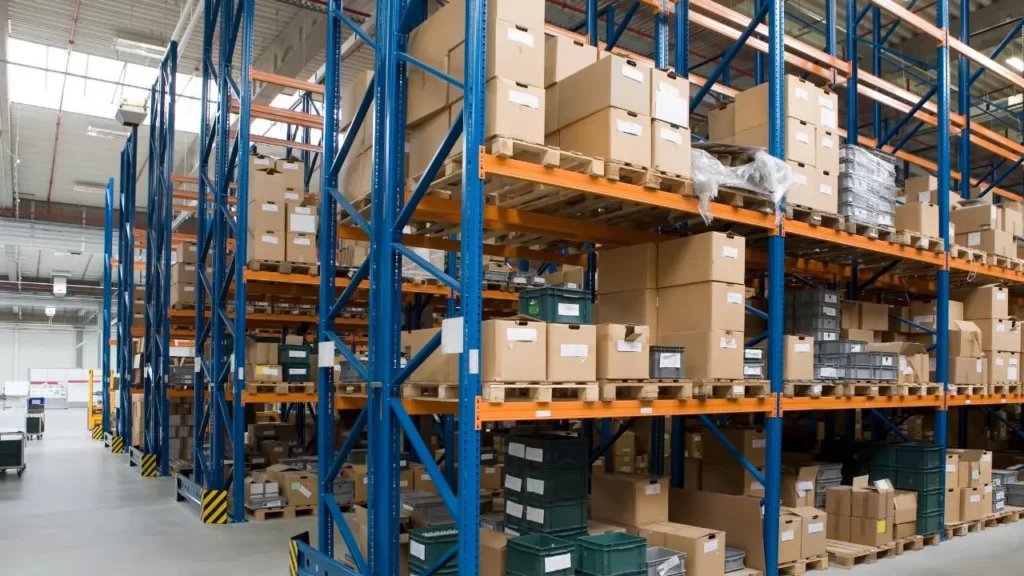
Industrial racking refers to engineered steel storage systems designed to store palletised goods safely and efficiently. The most common configuration in Australia is selective pallet racking, made up of upright frames, horizontal beams, bracing, baseplates, and anchors. Each system is engineered with specific load ratings.
These systems are engineered with specific load ratings and are designed to:
- Maximise vertical storage space
- Improve picking efficiency
- Support forklift operations
- Maintain clear load-bearing parameters
Different racking types are used depending on storage and handling needs.
According to the Australian Bureau of Statistics, warehousing activity has grown steadily in recent years, reflecting broader freight and online retail demand. This growth places greater pressure on safe, scalable storage systems.
Proper system selection also ties into workflow planning and material handling efficiency. Strategic Warehouse Layout decisions influence aisle widths, load access, and safety zones. Engineers design every racking system around safe working load (SWL) and uniform distributed load (UDL) ratings. These are not optional labels. They are compliance requirements under Australian standards.
New vs Used Racking: How They Really Compare
When choosing between new and used racking, the difference is less about the steel itself and more about documentation, traceability, and risk. Consider these factors:
| Feature | New Industrial Racking | Used Industrial Racking |
| Upfront Cost | Higher, predictable | Lower, variable |
| Compliance Certainty | Guaranteed with documentation | Often unavailable; requires inspection |
| Warranty | Included | Rare |
| Load Ratings | Certified on delivery | Often missing or uncertain; may need engineering verification |
| Installation Support | Supplier or engineer-backed | DIY or third-party; may require professional checks |
Key Points:
- New Racking: Engineered to current standards, comes with load charts, compliance documents, and a warranty. Ideal for high-throughput, long-term, or heavy-load operations.
- Used Racking: Sold “as-is,” may have unknown load history or missing documentation. Suitable only for temporary, low-risk, or budget-constrained setups, but professional inspection is essential.
- Safety and Compliance: Regardless of age, AS 4084 and Work Health and Safety laws apply. Full certification and structural integrity checks are critical to minimise legal, operational, and insurance risks.
According to Safe Work Australia, employers must ensure plants and structures are safe and without risk so far as reasonably practicable. This legal duty applies regardless of whether the equipment is new or second-hand.
Cost Considerations for New and Used Industrial Racking
Upfront Costs
Based on 2024–2025 Australian supplier pricing data and industry estimates:
- Used pallet racking: Often 30–50% cheaper upfront than equivalent new systems, depending on condition and availability.
- New pallet racking: Higher initial cost, but includes certification, engineering documentation, and warranty.
The Australian Taxation Office recognises racking as depreciable plant equipment under business asset rules, meaning cost considerations should include tax treatment and asset lifespan.
Compliance and Inspection Costs
Under AS-4084-2023, racking must be installed, inspected, and certified appropriately. According to Safe Work Australia, employers have a primary duty under Work Health and Safety laws to ensure plants and structures are safe.
If you purchase used racking, additional costs may include:
- Structural engineer inspection
- Replacement of damaged uprights or beams
- Re-anchoring or re-levelling
- Load rating verification
- New signage
Follow proper warehouse inspection procedures to ensure racking is safe and compliant.
Total Cost of Ownership
Evaluate the cost of new versus used pallet racking over a 10–15 year horizon. New systems typically include warranties and predictable performance. Used systems may require more frequent maintenance or part replacement.
Safety and Compliance in Australia
Australia’s governing standard for steel storage racking is AS 4084 2023. It sets out requirements for:
- Structural design
- Fabrication
- Installation
- Load signage
- Ongoing inspection
In addition, Work Health and Safety legislation requires businesses to provide safe plants and structures. According to WorkSafe Victoria, duty holders must eliminate or minimise risks so far as reasonably practicable.
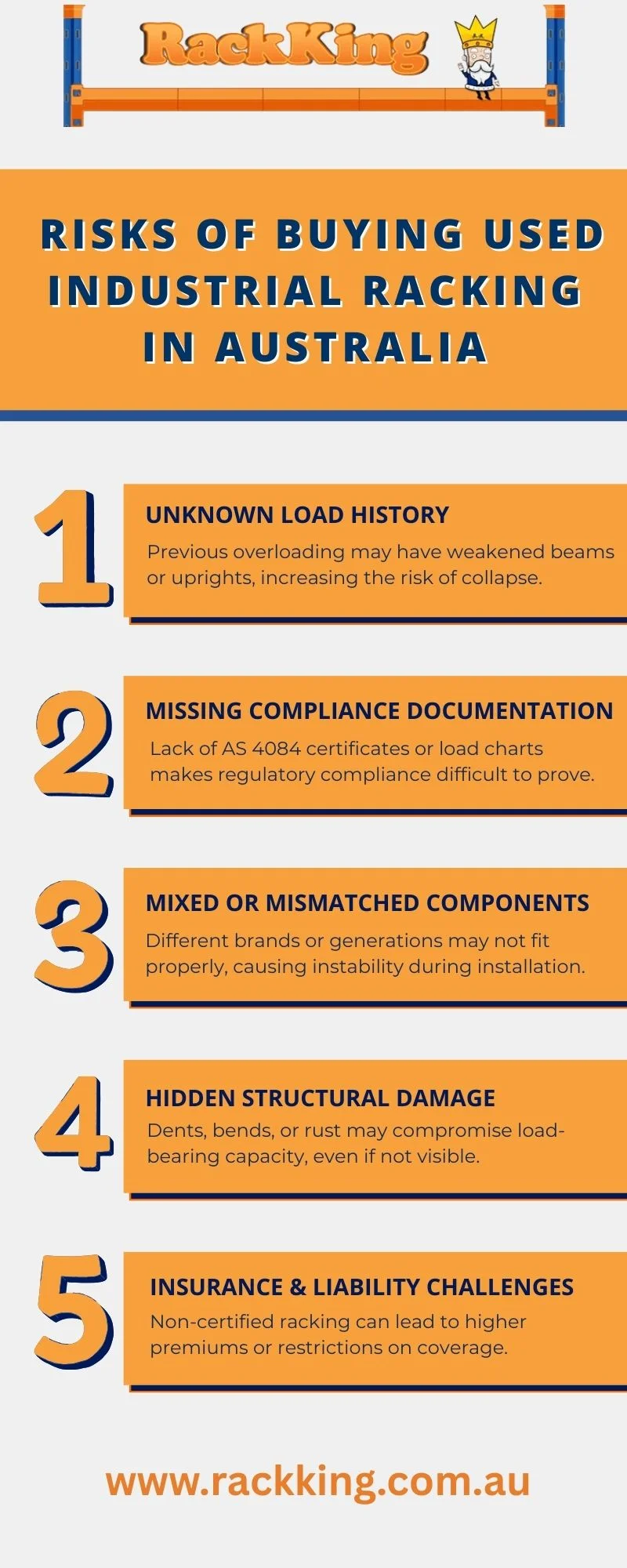
Compliance challenges with used racking include:
- Missing manufacturer identification
- Lack of load rating plates
- No engineering documentation
- Mixed-brand components
Without documentation, proving compliance to regulators or insurers becomes significantly harder. This is particularly relevant if a structural failure occurs.
Essential Steps for Safe Racking Installation
Industrial racking installation is not a simple assembly task. It requires:
- Accurate floor slab assessment
- Proper anchoring
- Beam levelling
- Correct bracing configuration
- Alignment to engineering specifications
Improper installation can reduce load capacity and increase collapse risk. Used racking frequently presents complications such as mismatched components or subtle structural deformation. Professional installers typically recommend engineering checks before installing second-hand systems. This is why racking installation should be carefully checked and verified. Installation quality directly affects operational efficiency, forklift access, and long-term safety.
Load Ratings and Structural Integrity
Two technical terms every decision-maker should understand:
- Uniform Distributed Load (UDL): The evenly distributed load across a beam level.
- Safe Working Load (SWL): The maximum load a component or bay can safely carry.
AS 4084 requires clear load signage on racking installations. According to Engineers Australia, structural systems must operate within certified design loads to prevent progressive collapse.
Used racking often lacks verified load charts. Even if beams appear intact, previous overloading may have compromised structural capacity.
When buying used pallet racking Australia-wide, you should request:
- Original manufacturer documentation
- Confirmed compatibility of components
- Engineering sign-off where documentation is missing
High-throughput environments cannot confidently integrate warehouse storage solutions without reliable load data
Risks of Buying Used Industrial Racking in Australia
When Used Industrial Racking Is a Practical Choice
Buying used pallet racking Australia-wide may be reasonable in limited scenarios:
- Temporary facilities
- Short-term overflow storage
- Low-load applications
- Budget-constrained start-ups
However, due diligence is critical. Industry guidance recommends:
- Purchasing from reputable resellers
- Avoiding mixed-brand components
- Conducting independent structural inspections
- Verifying load signage compliance
Consider an engineering assessment mandatory when documentation is unavailable.
When New Industrial Racking Is the Better Choice
New systems are typically the better option when:
- Throughput is high
- Loads are heavy
- Operations are long-term
- Insurance scrutiny is significant
- Expansion is planned
Although the cost of new vs used pallet racking is higher upfront, new installations provide:
- Warranty protection
- Compliance documentation
- Engineering traceability
- Reduced downtime risk
For businesses scaling operations, predictable performance often outweighs short-term savings.
Conclusion
There is no universal answer in the new vs used industrial racking debate. The correct choice depends on operational scale, risk tolerance, and long-term plans. Research consistently shows that safety, compliance, and documentation must weigh heavily in the decision. New systems offer predictable performance and regulatory assurance. Professionally inspected and certified used systems can be suitable for short-term or low-risk applications. For most long-term Australian warehouse operations, the decision is less about saving money upfront and more about reducing structural, legal, and operational risk over time.
For expert guidance and tailored warehouse racking solutions, consult RackKing to ensure your storage systems meet Australian standards, maximise efficiency, and maintain full compliance.
FAQs
What inspections are required before installing used racking?
AS 4084 requires installation, inspection and ongoing review. Engineering assessment and load certification are recommended.
How do used racking systems affect warehouse insurance premiums?
Insurers may charge higher premiums or restrict coverage for racking without documentation. Certified and inspected used racking helps maintain standard insurance terms.
What maintenance is required for used pallet racking?
Regular inspections for dents, bends, and alignment issues are essential. Any damaged or worn components should be repaired or replaced to ensure safety and compliance.
How do load ratings differ between new and used racking?
New racking comes with certified load ratings, while used systems often lack reliable documentation. Engineering verification is needed before operational use.
Can used racking support warehouse layout optimisation?
It can, but planning must account for varying beam heights and bay widths. Standardising components and inspecting structural integrity ensures efficiency and safety.