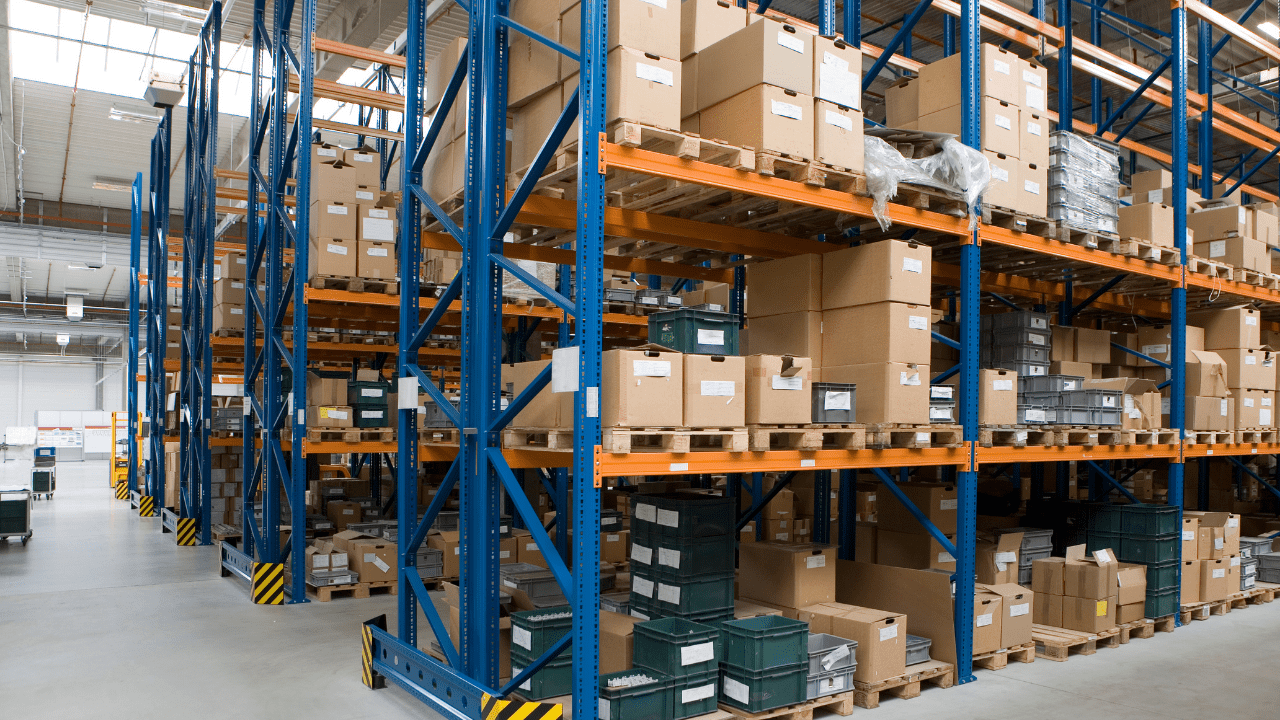
Every warehouse should prioritise racking safety. Mistakes can affect employee morale, lead to dangerous situations, and decrease productivity. 137 workers are injured every year in Australia due to preventable racking failures average cost per incident: $132,000 in damages, fines, and downtime. Pallet racking in Australia is often not properly installed by many warehouses, resulting in accidents, product loss, and failure to comply with warehouse racking safety standards.
To have an efficient, organised, safe, and secure warehouse, you must ensure that your racking is properly installed. This article describes the mistakes to avoid and the steps that can be taken to ensure warehouse racking is maintained.
Quick Statistics: Racking Accident Data Australia
- 35% of warehouse injuries involve racking failures
- 28% of incidents are caused by overloading beyond capacity
- 6-monthly inspections reduce accidents by 73%
- Maximum corporate fine: $3 million under the Work Health Safety Act 2011
Common Rack Mistakes That Threaten Safety
It is common for warehouses to make mistakes when it comes to racking. They are often caused by a lack of planning or inadequate inspection, which puts employees and their products at risk. This knowledge helps prevent warehouse accidents.
1. Installation Errors
Unsafe pallet racks are a common mistake in warehouses. They become dangerous when improperly levelled or assembled. It is more likely that racks will fall under their own weight if they are installed incorrectly. This leads to injuries for employees as well as damage to the inventory.
- Make sure you follow all instructions from the manufacturer for installing pallet racking in Australia.
- Professional installers are recommended for high-density or large racks.
- Check floor anchors monthly for looseness
- Test load capacity with a 1.5x safety factor
2. Overloading Beyond Capacity
Unsafe pallet racking is caused by overloading the racks, accounting for 28% of all incidents. They become unstable and weaker.
- Never exceed the UDL ( Uniformly Distributed Load) rating on beam labels.
- Verify the weight capacity of racks before placing your items.
- Label your shelves with maximum weights so that workers are clear about the restrictions.
- Inspect the racks regularly to detect any bends, bulges, or stresses on the beams.
Quick Test: If you can slide a 2 mm feeler gauge under a straight-edge on the beam, it’s overloaded.
3. Poor Layout Planning
Narrow aisles and blind corners double forklift impact rates.AS 4084 requires a minimum of 3.9 m aisles for counter-balance trucks.
- Forklifts require sufficient space to operate safely in the warehouse.
- Separate storage from high-traffic areas to reduce the risk.
- 2.8 m minimum for very-narrow-aisle (VNA) trucks
- Inventory should be organised logically. Store frequently accessed items in easily accessible locations.
4. Neglecting Maintenance
Failing to maintain warehouse racking can be a costly mistake. Over time, corrosion, loose nuts, and weak beams will reduce its strength.
- To identify potential problems, schedule maintenance at least every six months.
- Replace damaged or bent components to prevent accidents.
- Be compliant by including maintenance checks in any warehouse racking safety Australia standards compliance program.
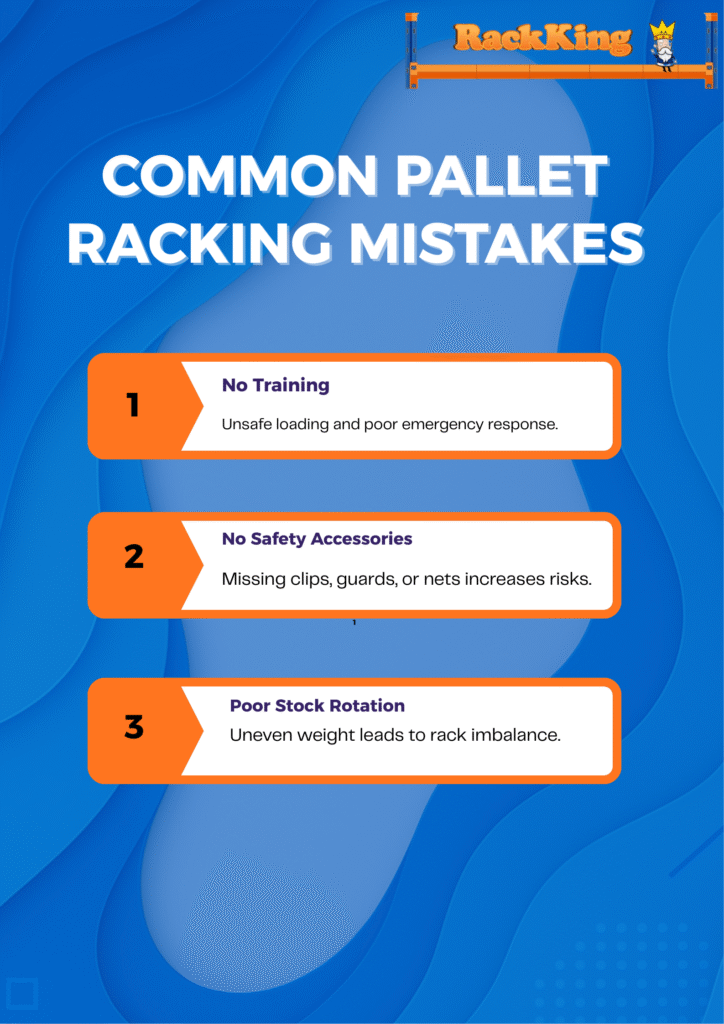
5. Absence Of Employee Training Program
73% of rack impacts happen within the first 90 days of forklift operators starting work.
- Training sessions should be conducted regularly on safety and the pallet racking system in Australia.
- Teach stacking and retrieval techniques.
- Training employees should include an emergency plan so they will know what action to take in the case of an injury.
6. Ignoring Safety Accessories
Safety clips, end-of-aisle protection, and netting are all racking accessories that protect workers and inventory from accidents. If you ignore them, the risks increase.
- On all racks, install protective barriers and clips.
- To prevent falling objects from hitting workers, use safety nets.
- Check these accessories every time you inspect your racks.
7. Inconsistent Stock Rotation Methods
Failure to properly rotate the stock results in an imbalanced distribution of weights, leading to overloading and overbalancing of certain sections. This affects the warehouse rack maintenance. Following methods, such as First In, First Out (FIFO), ensures that racks stay stable and secure.
What Is The Importance Of Racking Inspection?
The inspection of warehouse racks is mandatory to ensure their safety and compliance with the regulations.
- This also helps to prevent any accidents.
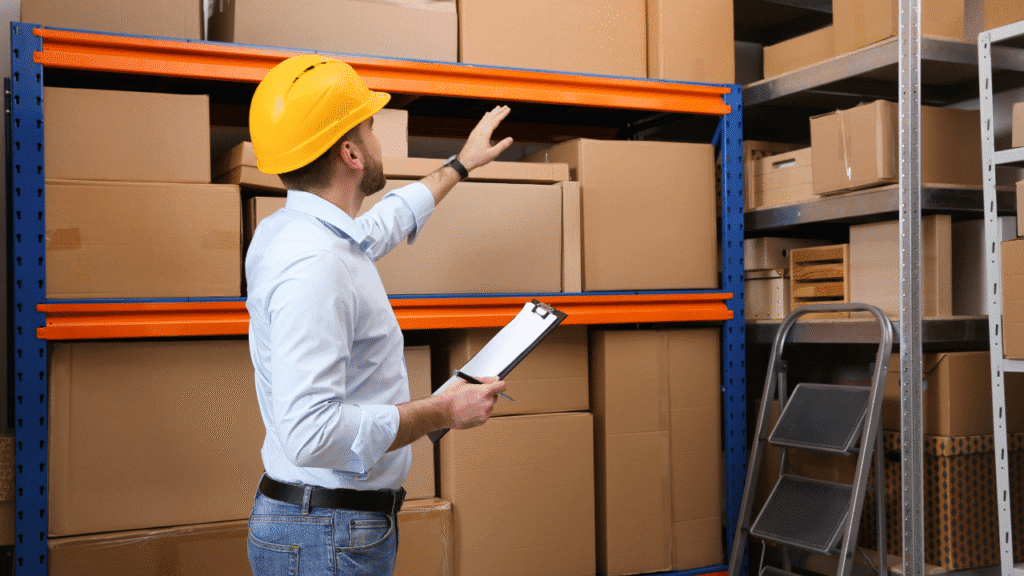
- Routine inspections help detect structural flaws, damaged beams, or misaligned racks before they become more serious.
Inspection Schedule:
| Type | Frequency | Who | Focus |
|---|---|---|---|
| Visual | Weekly | Warehouse staff | Beam deflection, loose bolts |
| Detailed | Monthly | Supervisor | Bracing, anchors, connectors |
| Certified | 12-monthly | Professional | Load ratings, seismic bracing |
Key Elements Of Effective Racking Inspection
These are the key elements of effective racking inspection.
- Visual Inspection: Look closely for damaged beams and bolts.
- Load assessment: Verify that racks don’t exceed the maximum weight.
- Check alignment: Ensure upright supports are in a vertical position, are straight and uniformly spaced.
- Documentation: Maintain detailed records on all inspections. Repairs. Replacements.
Regular warehouse inspections help to support Australia’s safety standards for warehouses and foster a sense of responsibility in employees. Security can be increased by hiring certified inspectors.
Common Pallet Racking Mistakes
Warehouse Safety Standards Australia And Compliance
Not only is it important to comply with warehouse racking safety Australia standards, but you also need to do so to avoid fines and keep your warehouse running efficiently. Pallet racking is only safe if all rack systems are compliant.
- Use AS 4084 steel storage rack standards to guarantee safety.
- Professionals certified in racking maintenance should inspect racks at regular intervals to ensure compliance.
- Audits or safety checkups may require you to keep detailed records regarding inspections, maintenance and repairs.
To find out more about Australian warehouse security standards, you can visit Standards Australia – AS 4084.
Racking Safety Tips
To ensure racking security in a storage facility, it isn’t just about complying with warehouse safety regulations in Australia. You also need to consider the employees you are protecting and how efficient your operations can be. Tips to improve the safety and reliability of your storage systems are provided in this article.
1. Investing Quality Racks
Picking the best racks for your pallet racking system is essential to safety. The daily operations of warehouses can be handled by racks made to Australian standards. Use of racks with low quality or that have not been certified increases the chances of a collapse. A high-quality shelf will reduce maintenance costs and ensure long-term safety.
2. Regular Inspections
In order to detect weaknesses in racking before they can become hazards, you must conduct routine inspections. Weekly visual inspections can spot bent or broken beams as well as missing bolts or rust. Professional check-ups twice a year provide an in-depth review of the structural integrity. A regular inspection will help you avoid accidents, stay compliant, and maintain the longevity of your racks.
3. Employee Involvement
To maintain warehouse shelving, employees play an important role. To prevent accidents, encourage them to report broken or unstable racks. The workers who practice safety feel valued. This contributes to a safer working environment.
4. Proper Labelling
For pallet rack safety, it is vital to label the weight limit and shelf capacities. Labels alert workers to maximum loads. They also prevent overloading, which can lead to rack failures. Consistent labels ensure all warehouse workers follow the same safety guidelines. This reduces errors and possible hazards.
5. Emergency Preparedness
Emergencies, including fires, spills and collapses, must be planned for. Warehouse safety in Australia can be improved by maintaining clear evacuation routes and training personnel on emergency procedures. Being prepared helps employees respond safely and quickly in critical situations.
6. Maintain Clear Aisles
Forklifts get stuck in cluttered aisles, leading to accidents. By keeping walkways clear of pallets, equipment or boxes, you can improve efficiency and safety. By keeping aisles clear, workers avoid collisions and move more efficiently without disrupting workflow.
The implementation of these practices increases racking security, improves operational efficiency, and reduces the risk of accidents. The warehouse that follows these steps is safer and better organised. It benefits the employees, the management, as well as clients.
Conclusion
For racking safety to be maintained, warehouse safety standards in Australia must be met. It is important to ensure that pallet racking Australia is set up correctly, there are regular racking checks, and consistent warehouse racking maintenance. This protects workers and promotes a productive environment.
Need Help With Your Warehouse Racks Or Storage?
We offer solutions certified by the ANSI for safe and efficient warehouse storage. This includes professional racking installation or regular racking checks. You get quick quotes as well as practical guidance and compliant racks for your warehouse.
Rackking provides expert advice and a comprehensive assessment.
FAQs
What is the largest rack-related mistake that warehouses make?
The most common mistake is overloading racks or failing to follow manufacturer instructions during installation, which creates safety hazards and reduces operational efficiency.
How often do you recommend inspecting your warehouse racking?
Australian safety regulations specify that professional inspections must be done every six to twelve months.
Why does pallet racking safety matter?
Pallet racking safety protects employees, prevents damage to inventory, and ensures compliance with warehouse safety standards in Australia.
What measures can improve racking security?
Key safety measures include employee training, adequate installation and labelling of the loads, regular racking inspections, as well as installation of safety accessories.